
Cleaner, Clearer Water for Your Swimming Pool
High-tech UV filters have been used for decades to sanitize drinking water. This technology is now becoming a top choice for cleaning and filtering swimming pools. UV sterilizers provide cleaner, clearer water for your Minnesota swimming pool while using very little chlorine and producing no harmful byproducts.
Explore the Paramount UV Pool Cleaner
The Paramount ultraviolet light pool filter system helps sanitize your pool while cutting down on the use of heavy chemicals. Only a very small amount of chlorine is needed to control any lingering bacteria, so there’s little risk of chloramine-related problems — such as red, stinging eyes, skin irritations, asthma and allergies.
In addition to being one of the safest pool sanitation methods, the Paramount UV filter is affordable to buy, operate and maintain. It features impressive energy efficiency, with low operating costs and requires less maintenance than traditional pool filtration methods.
Explore some of the features of the Paramount ultraviolet light pool filter:
- Quick-release piping connections allow for easy installation
- Automatic operation is triggered by the flow of water through a pressure switch
- 100% corrosion resistant and covered by a 2-year warranty
- UV bulbs designed to last around 18 months
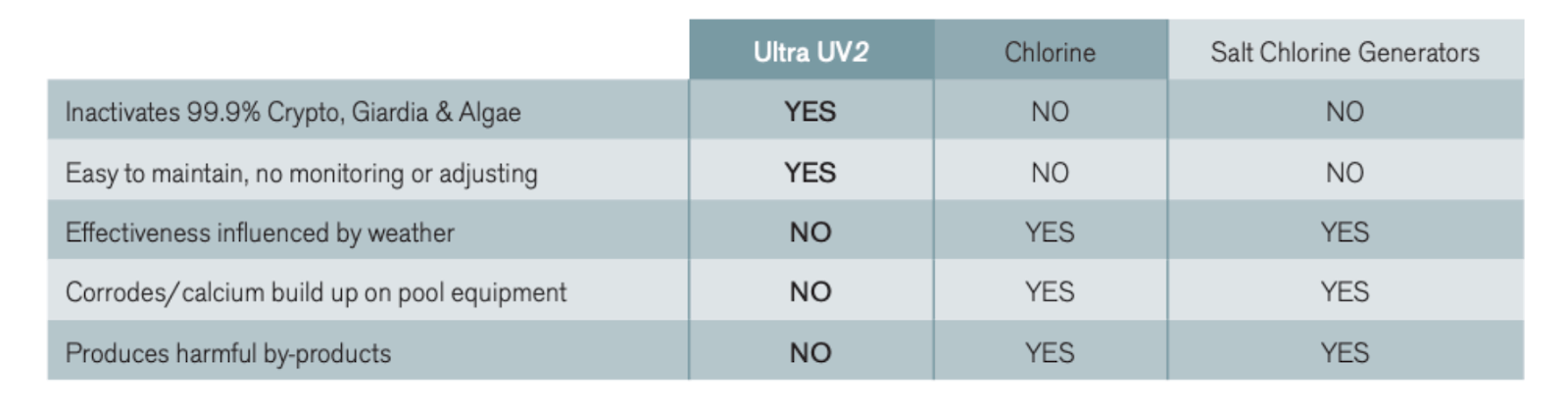
Paramount UV vs. Other Pool Filtration Systems
Wondering How a UV Pool Filter Works?
In each ultraviolet pool filter system, there is an initial filter that removes all visible particles before water reaches the UV lamp. There, high-intensity germicidal light waves are emitted. These light waves scan over the water, zapping any microorganisms. The UV pool cleaner first alters the DNA of microscopic pests so they can’t reproduce, then it kills them. Finally, the water leaves the filter and is pumped into your pool.
Frequently Asked Questions
A UV pool filter uses high-intensity germicidal light to sanitize your pool water as it circulates through the system.
First, an initial filter removes visible particles before the water reaches the UV lamp. From there, the light waves target microorganisms by altering their DNA so they can’t reproduce before eliminating them completely. It’s particularly effective against chlorine-resistant organisms like cryptosporidium, giardia and certain algae strains that traditional sanitization methods often struggle to handle.
Yes, but significantly less of it. UV filtration handles the heavy lifting on microorganism elimination, so only a small amount of chlorine is needed to manage any residual bacteria. The result is a pool that stays clean and safe without the high chemical loads that come with a traditional chlorine-only setup. For swimmers, this means:
- Far fewer chloramine-related issues like red, stinging eyes and skin irritation
- Less risk of asthma flare-ups or allergy responses triggered by chemical exposure
- Water that smells and feels noticeably cleaner and more luxurious
It’s one of the better options available for exactly that reason. Because UV filtration dramatically reduces the amount of chlorine needed to keep water clean, swimmers are exposed to far fewer harsh chemicals that cause discomfort and strong smells.
For families who spend a lot of time in the water, there’s a meaningful difference.
UV bulbs are designed to last around 18 months under normal operating conditions. The Paramount UV system we install comes with a 2-year warranty and runs automatically whenever water is flowing through it, so it’s only operating when it needs to be.
- A salt chlorine generator automates your sanitization by converting salt into chlorine through electrolysis, reducing the need to add chemicals manually.
- A UV filter uses light to neutralize microorganisms that chlorine and salt-based systems may not be able to eliminate on their own. UV filtration also produces no harmful byproducts and requires only a very small amount of chlorine to manage any residual bacteria, making it one of the safest sanitation methods available.
Ready To Switch to UV Filtration?
Get in Touch